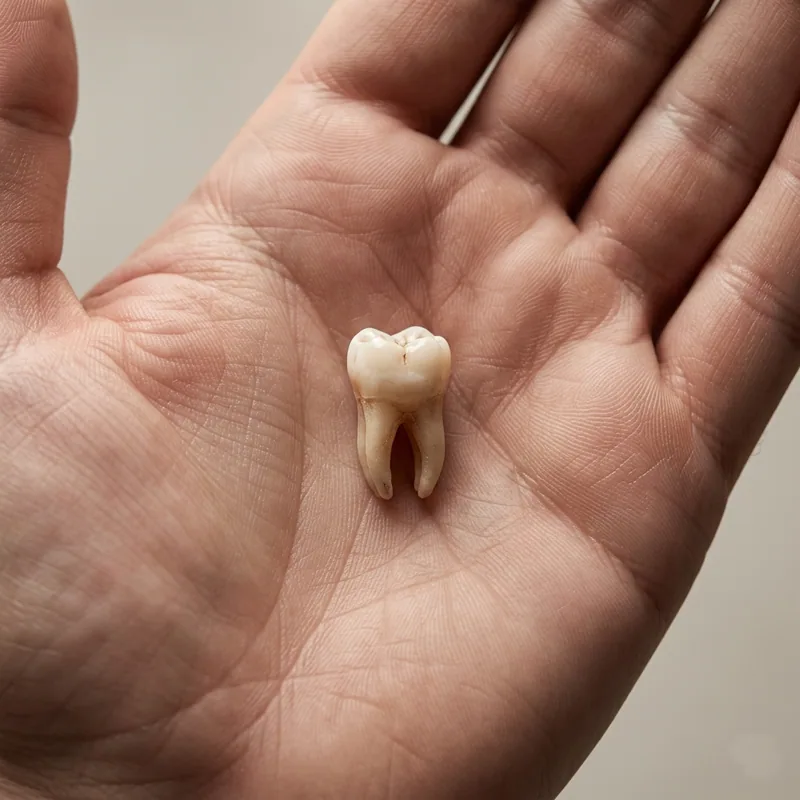
Losing Teeth
One of the most unsettling and most searched dream themes worldwide. You reach up, and your teeth are loose, crumbling, falling into your hands. The panic feels viscerally real. But this dream carries a much deeper message.
🧠 Freud's Interpretation
For Freud, losing teeth was one of the most significant dream symbols. He linked it to castration anxiety and the fear of losing potency . Both sexual and social. Teeth represent power, attractiveness, and the ability to assert oneself. When they fall out in a dream, the dreamer confronts a deep-seated fear of becoming powerless, unattractive, or insignificant.
📖 Show source
Freud, S. (1900). The Interpretation of Dreams. Franz Deuticke, Vienna.
🔮 Jung's Interpretation
Jung took a more transformative view. He linked tooth-loss dreams to rebirth and transformation, much like a child losing baby teeth to make way for adult ones. The dream signals that an old part of the self is being shed. Something outdated must go so that something new can emerge. It is the psyche's way of marking a transition between life stages.
📖 Show source
Jung, C. G. (1964). Man and His Symbols. Aldus Books, London.
✨ Spiritual Interpretation
Across many spiritual traditions, teeth symbolise communication and self-expression. Losing them in a dream may indicate that you are struggling to voice your truth, holding back words that need to be spoken, or feeling unheard. Some cultures interpret tooth-loss dreams as omens of change. A warning to pay attention to what you are not saying.
📖 Show sources
Ibn Sirin (8th c.). Tafsir al-Ahlam.
Moss, R. (2009). The Secret History of Dreaming. New World Library.
⚡ Biosynchronous Analysis
Tooth loss dreams correlate significantly with nocturnal bruxism (teeth grinding). The trigeminal nerve transmits jaw tension to the brain, which translates it into dream imagery. Elevated stress amplifies both grinding and dream intensity.
📖 Show sources
Rozen, N. & Gaul, C. (2016). Bruxism and temporomandibular disorders in sleep. Cephalalgia, 36(1). · Revonsuo, A. (2000). Threat simulation theory. Behav. Brain Sci., 23(6).
📊 From the Ethyria Community
Most Common Companion Symbols
 Being Naked (22 %)
 Exams & Failure (19 %)
 Falling (14 %)
 Ex-Partner (11 %)
🔄 Common Variations
All teeth fall out at once
Complete loss of control, total transformation. Often occurs during major life upheavals.
Teeth crumble into pieces
A gradual erosion of confidence or identity. Something you relied on is deteriorating slowly.
 Snakes
Spitting out teeth
Actively releasing something: words, beliefs, outdated self-images. Can be a sign of liberation.
 Death & Dying
Teeth growing back
A powerful symbol of renewal and resilience. The psyche affirms its capacity to regenerate.
 Spiders
 Being Chased
Losing teeth while smiling
Fear of being exposed. You present a confident face, but anxiety lurks underneath.
 Pregnancy
 Water & Ocean